
Appreciating Insects
A post for National Insect Week (22-28 June 2026)

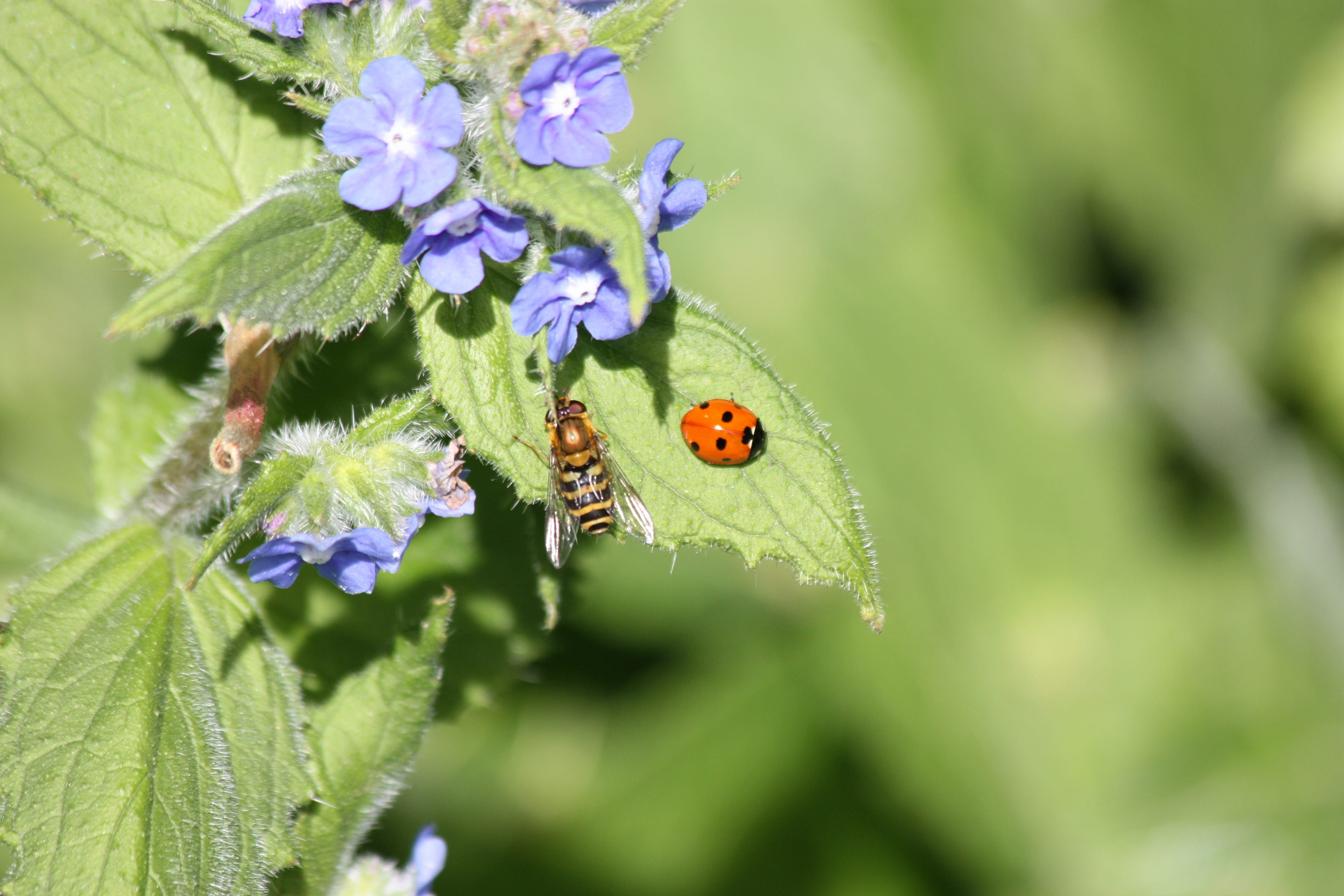
One of my strongest childhood memories is of visiting a coastal town in North Wales during the famously hot summer of 1976 (which is quickly becoming our new normal). Everywhere along the seafront promenade was covered in ladybirds, you literally couldn’t see the seafront railings for all the red and black insects crawling over them. They were probably all Seven-Spot Ladybirds, like the much more recent example seen in the photo below alongside a Banded Hoverfly (Syrphus sp) on Green Alkanet.
Another, even earlier memory is of being scared of two dragonflies that appeared unexpectedly (and for the only time ever) in our suburban garden. I remember them seeming huge (hence the fear) so I must have been very small at the time.
Many children are fascinated by insects, though this interest isn’t often encouraged and most people don’t retain an active interest into adulthood. I was always interested in butterflies, but my broader insect in insects was prompted by my partner who has always been interested in insects, particularly bees and beetles. About ten or eleven years ago, I noticed a particularly striking looking hoverfly in an Edinburgh park, which prompted my interest in that group of insects. (Sadly, I don’t seem to have a record of which species of hoverfly it was that inspired my interest!). If you’re interested in hoverflies, then you’ll enjoy Mark’s posts over at Easily Distracted by Hoverflies. Here’s his latest post:

National Insect Week is organised by the Royal Entomological Society, and aims to get people of all ages across the UK and Europe, interested in insects. You can check out events in your local area; find out more about insects and access fun activities.
Insects are endlessly fascinating and many have interesting life-cycles. I recently wrote about my observations on cuckoo bees laying their eggs in the nests of the wonderfully named Chocolate Mining Bees in this post:

While Bryan Pfeifer of Chasing Nature writes about the beautiful and fascinating Dogbane Leaf Beetle in this excellent article

There are many things you can do to help insects, such as planting pollinator friendly flowers (include both flowers with nectar for adult insects such as bees and moths and plant species that moths and butterflies lay their eggs on) or not using insecticides in your gardens. Or you can make a bug hotel, where insects and other invertebrates can make their homes. Today, 24 June, is National Upcycling Day, so how about creating a bug hotel with upcycled materials? The RSPB (Royal Society for the Protection of Birds) have instructions for making a bug hotel here. You can incorporate various upcycled materials, such as old wooden pallets or bricks.
Thank you for this reminder of how interesting insects are.
Nice Juliet! You write with Natural Intelegence...no AI! We're fortunate to have an annual Insect Festival in Tucson that is kid-centered (now my granddaughters are raising hissing cockroaches in the their bedrooms). Both have also attended a summer Bug Camp in Flagstaff--the graduation ceremony involves cooking and eat a selection of bugs like giant water beetles and mealworms! Kids and bugs! I say indeed!